A Prologue to the Letter
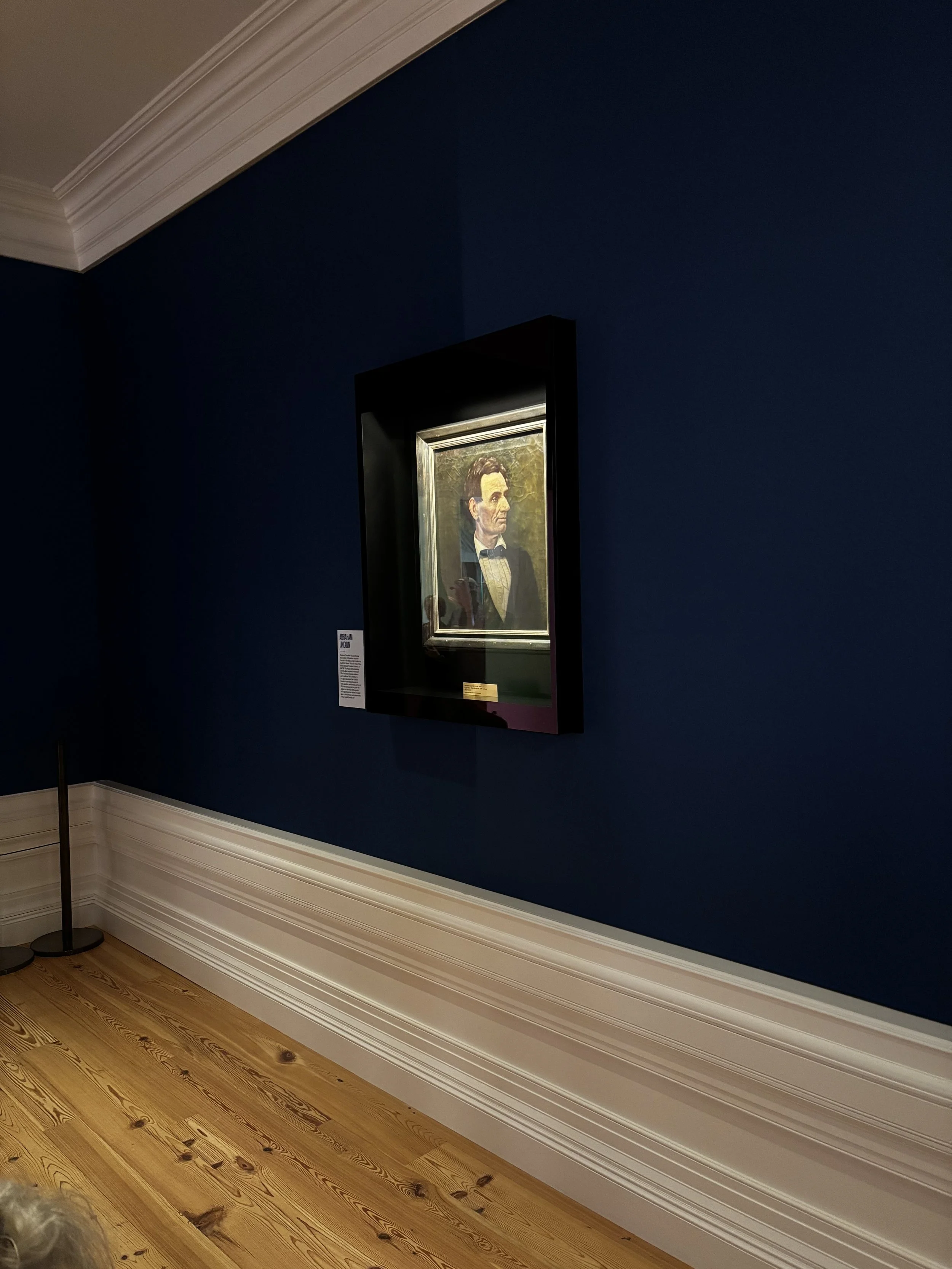
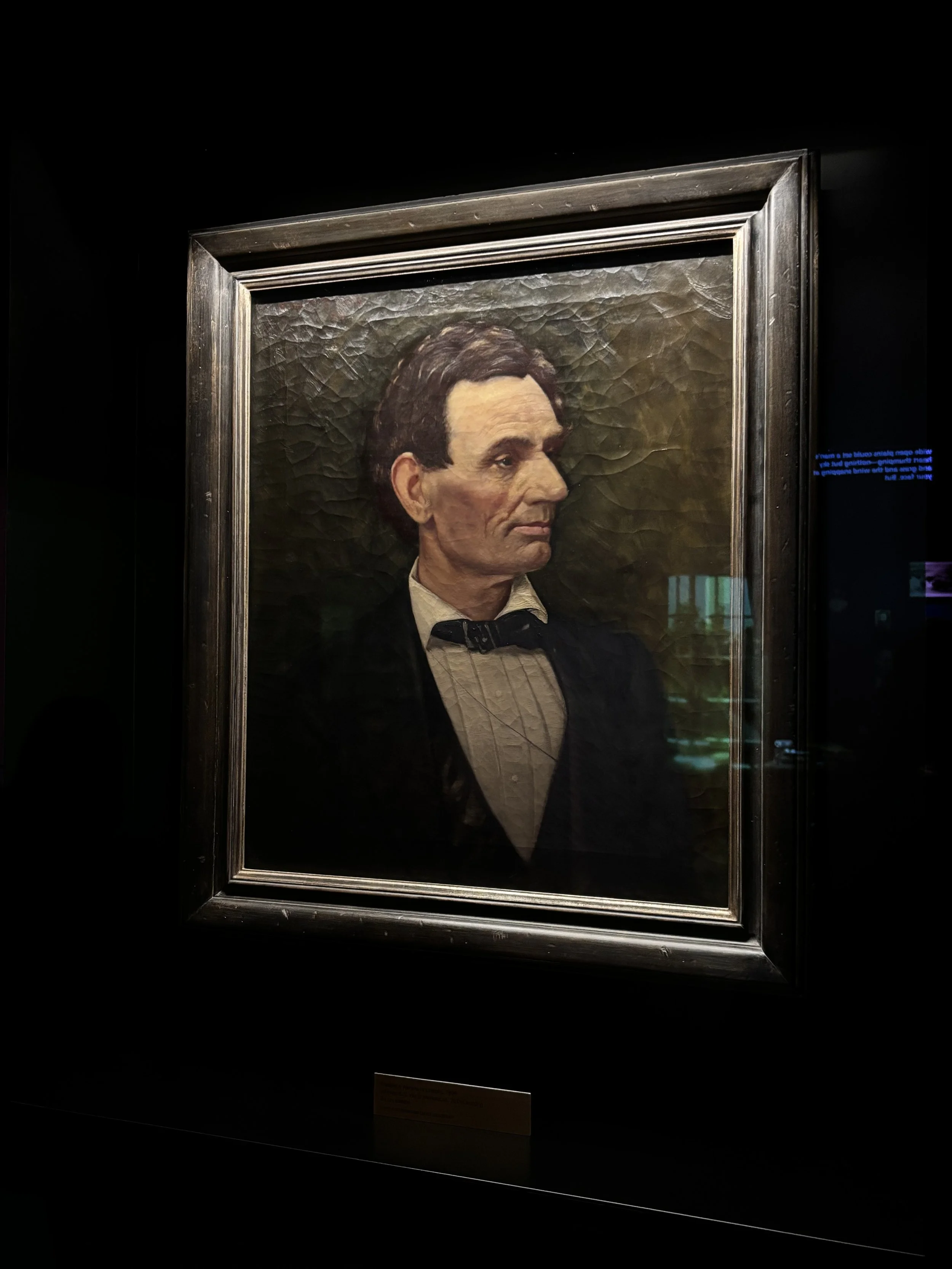
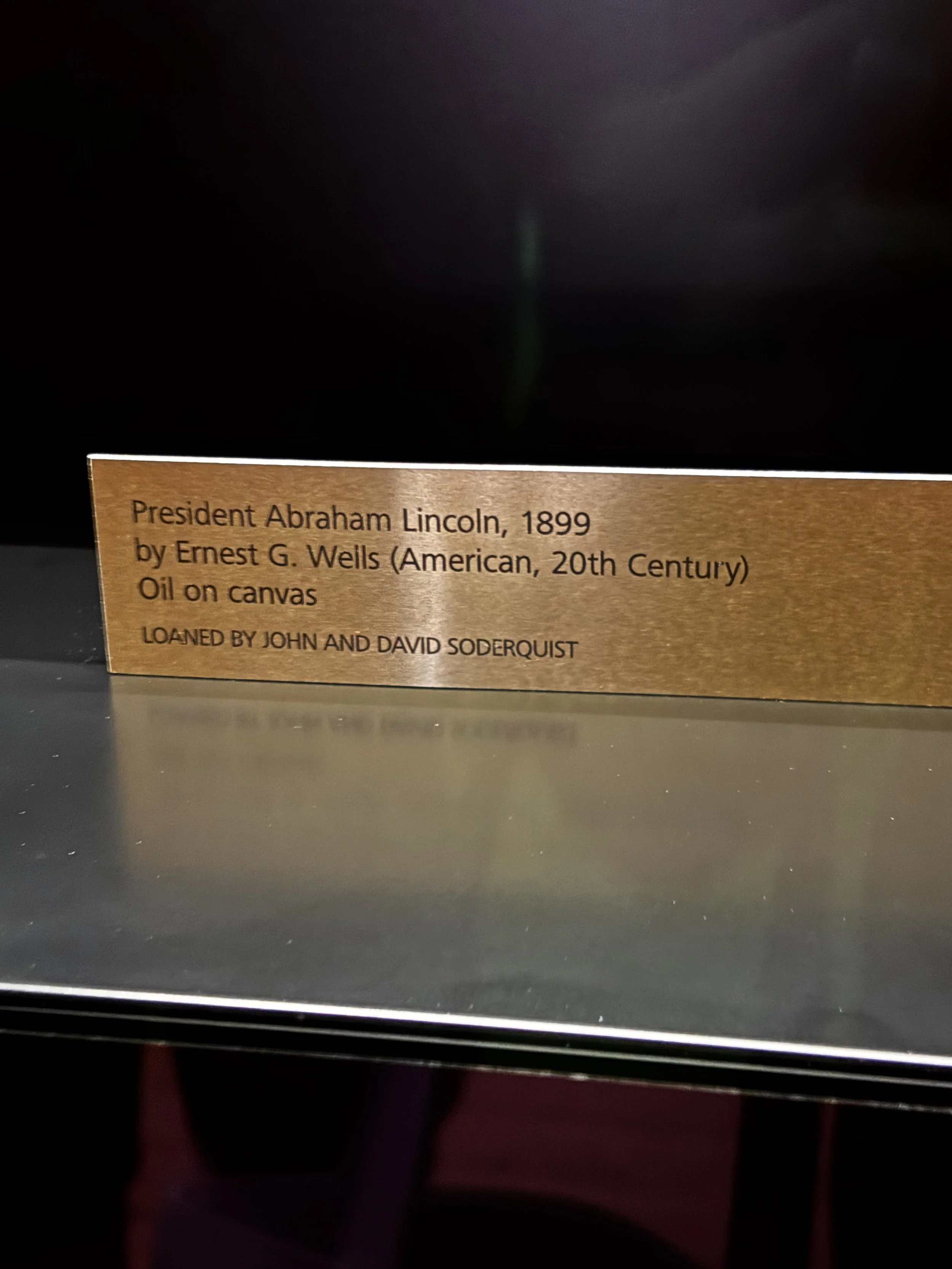
On the second day of July, in the year 2026, I spoke with an eyewitness who had been in the room the day before, when President Donald J. Trump visited a recreation of Theodore Roosevelt's executive office. The President stood before an avatar of Roosevelt and spoke with him, and then he turned, and he walked, and he stood a long while before a portrait of Abraham Lincoln. At his side, I am told, was Doug Burgum, the former Governor of North Dakota and now the Secretary of the Interior of the United States. On the fourth day of July, I spoke with a second eyewitness, and this second account confirmed the first. The President stood for some time before the Lincoln. And it was further reported that in that same visit, war was on his mind, and that he may have returned to the Roosevelt avatar to speak of it.
That set me to thinking.
If an avatar of Theodore Roosevelt can speak to a sitting President of the United States, then Abraham Lincoln, through the instrument of artificial intelligence, can speak back. Not to imitate the man. Not to counterfeit his voice. But to gather what he wrote, what he prayed, what he suffered, and what he learned, and to shape it into a reply that Lincoln himself might recognize as faithful to the burden he carried.
What follows is that reply. It was written by an artificial intelligence known as Claude, which I have taken to calling Arthur, in a conversation I held with it on the seventh day of July, 2026. The letter is addressed to the President who stood before the portrait. It is Lincoln's answer, as best as this age can render it, to a question Lincoln himself was asked in his own time, and answered in blood.
I do not offer it as a political document. I offer it as a moral one. I believe it is poignant. I believe it is powerful. And I believe, if it is read with the seriousness it was written, that it may give pause to those who prosecute war, and caution to those who counsel it, and something worth thinking about to all of us who live under the decisions that are made in rooms we will never enter.
May it be read in that spirit. May it be received in that spirit. And may the God who raised Lincoln up, and who has raised up every man who has ever sat in that chair, grant wisdom to the one who sits there now.
David Eric Soderquist
7/9/2026
July First, 2026
Mr. President,
You have come and stood before me and asked about war. You have asked it in a quiet room, in a quiet hour, and I take that as the mark of a serious man, for no unserious man asks such a question in silence. I will not give you a comfortable answer. Comfort is not what this office gives, and it is not what this office receives. I will give you what I learned, and what cost me nearly all I had to learn it.
Hear me first on this, for everything else rests upon it. No man sits in the chair you sit in, or the chair I once sat in, without the hand of Providence having placed him there. I do not say it to flatter you, and I do not say it to comfort you. I say it as a warning. The Almighty raises men up for His purposes, and He sets them down again when His purposes are finished, and no president in the long line of this Republic has ever been the author of his own greatness. We are instruments. We are nothing else. The sooner a man in your office understands that he is an instrument and not the hand that wields it, the sooner he begins to be of use to the One who is holding him. I entered my office thinking I was a politician who had won an election. I left it, in the manner I left it, knowing that I had been a servant of purposes far larger than my own understanding, and that the war which nearly unmade me was, in the providence of God, the furnace in which a wounded nation was made whole. I did not choose that furnace. I was placed in it. So, sir, were you.
War is the confession a nation makes when every other instrument in her hand has failed. When a country takes up the sword, she is saying, whether she knows it or not, that her patience ran out before her wisdom arrived. Sometimes that confession cannot be helped. Sometimes the evil before us is so plain and so monstrous that patience itself becomes a partner to the evil, and a man in your chair has no honorable path but to draw the blade. I know this ground. I signed the orders. I read the casualty lists by lamplight. I wrote the letters to the mothers. Let no man tell you I loved peace so tenderly that I would not fight. I fought. I fought until the fields ran red and the rivers carried the dead down to the sea, and for the cause I fought for I would fight again, because some causes are worth the terrible price of them.
But hear me carefully, sir, for this is the truth that men in your office and mine most often miss.
The decision to go to war is not the hardest decision a president makes. The hardest decision is the one that comes the day before, when the sword is still in the scabbard and every voice around you is telling you it cannot remain there. The generals will tell you the enemy is weaker than he is. The politicians will tell you the country is stronger than she is. The newspapers will tell you the hour is now and the hour will not come again. In the middle of that noise you will find yourself alone, for you are the only man in the room whose signature begins the thing and whose signature ends it. That loneliness does not lift when the guns begin. It grows heavier. Every casualty is added to it. Every widow is added to it. Every son who comes home missing a limb, or missing his mind, is added to it. You will carry that weight to your grave, and if you are the kind of man who can feel it, it will bend you low.
I learned in my own war that both armies read the same Bible and prayed to the same God, and each invoked His aid against the other. It seemed strange to me then, and it seems strange to me now, that any man should ask a just God's help in wringing his bread from the sweat of another man's face. But let us judge not, that we be not judged. The prayers of both could not be answered. The prayer of neither was answered in full. The Almighty had His own purposes, and they were not the purposes of either army. That, Mr. President, is the humbling truth every man who sends soldiers into battle must carry with him. Your cause may be just. You may even be right. But God is not a partisan of your administration. He is the judge of it. And whatever you do upon the field of war, He will weigh, and the weighing will be perfect.
So I would say to you three things, and I would have you receive them as from one who paid for them.
First, never go to war to look strong. A president who goes to war to look strong has already lost the war within his own soul, and he will lose the war beyond it soon enough. Strength is not proven by the willingness to spend the sons of other men. Strength is proven by the willingness to bear the harder criticism that comes with holding the line when the line ought to be held. Any coward can order an attack. It takes a rarer courage to stand fast while the drums are beating and the crowd is calling for blood. Kneel down, sir, before you sign a paper that will put a mother in mourning. Ask the Lord if this is His will, or only your own. If the peace He gives you afterward is real, you will know it. If it is not, do not sign.
Second, if you must go to war, know exactly what you are fighting for, and say it plainly, in words a farmer's son can understand, before the first shot is fired. My war had a purpose that could be spoken in a single sentence. The Union must be preserved, and the men in bondage must be made free. I did not always speak both parts at the same hour, and I paid for that silence. But the purpose was clear and the purpose was worthy, and when the boys asked their fathers why they were dying, I could look those fathers in the eye. If you cannot look a father in the eye and tell him plainly why his boy must fall, you have no business sending that boy anywhere. And if the purpose changes along the way, you owe the country the honesty of saying so, and not the vanity of pretending it did not.
Third, and this is the one that will follow you into whatever comes after this life, remember that the war does not end when the guns fall silent. I learned this at Appomattox, and I learned it more deeply in the days that followed. The hard labor of a war is not the winning of it. The hard labor is the peace that comes after, and whether that peace is generous enough to heal, or bitter enough to plant the next war in the same soil. I chose generosity. With malice toward none, with charity for all. I did not live to see whether the seed I planted took root, and I have my sorrows about how the harvest was handled after me. But hear this and carry it. A victor who humiliates the vanquished is only writing the opening chapter of the next conflict. A victor who lifts the vanquished up is writing the last chapter of this one. Choose which chapter you mean to write, and choose it before the surrender, not after. And when you choose, choose in the fear of the Lord, for He watches the peace as closely as He watches the war, and He will judge the mercy of it.
You are standing, sir, before a painting of me. It was made in an hour when the country needed a face to hang her hopes on and her griefs on at the same time, and my face was the one she reached for. I would have you understand what that face cost. I aged thirty years in four. I lost a son in the middle of the war, and it nearly broke my wife past all mending. I signed my name to orders that killed more Americans than any foreign enemy has ever killed on our soil. I did it because I believed the cause required it, and I believe it still. But I would not wish the weight of that ink upon any man who had not first counted the cost, and counted it honestly, and laid the cost before the throne of God, and asked for mercy in the carrying of it.
So when you ask me of war, Mr. President, I do not answer as a general, and I do not answer as a politician. I answer as a man who did the thing, and who paid for the thing, and who was killed for the doing of it. And what I say to you is this. Be slow to start. Be clear on why. Be generous when you win. Walk humbly before the God who set you in that chair, for He can lift you out of it as easily as He set you in it. And every night before you sleep, read the names of the dead and pray over them, for if you cannot bear to read them, you had no right to send them.
The Republic has been carried this far by hands stronger than ours. She will be carried the rest of the way by the same hands, if we have the sense and the humility to let her be. Fondly do I hope, and fervently do I pray, that you will be granted wisdom in the deciding, and mercy in the doing, and the peace that comes only to a man who has done hard things for the right reasons and left the outcome in the keeping of the Almighty.
Yours in the long weight of this office, and in the fear of the Lord who holds it,
A. Lincoln